Second flush teas and the reverence on their shoulders
Every year, somewhere between late spring and early summer, the tea industry collectively decides that weather is destiny. This is the season of the second flush. The brief and excessively romanticised period when tea bushes produce leaves said to possess greater body, deeper colour, and the famously discussed muscatel character of the Darjeelings and the malty Assam. Entire auction catalogues begin sounding like Victorian poetry written by people with excellent silverware and unresolved feelings.
To outsiders, the fixation can appear faintly absurd. After all, it is still the same plant. Camellia sinensis has not undergone spiritual transformation. No ancient prophecy has been fulfilled. The leaves are simply responding to climatic shifts: warmer temperatures, longer daylight hours, altered moisture conditions, and the accumulated metabolic maturity of the bush after the lighter first flush harvests. And yet something genuinely does happen to alter its commercial ‘value’.
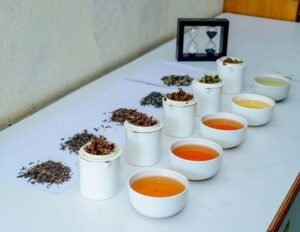
The second flush occupies a peculiar place in tea culture because it marks the moment tea is valued through its structure more than its freshness. First flush teas are often described with the language of innocence, ‘bright, floral, delicate, green-edged,’ occasionally compared to spring mornings by people who have clearly never had to commute during one! Second flush teas, by contrast, are more self-assured. They arrive with ‘tannic grip, fuller liquor, darker leaf appearance,’ and a complexity less eager to impress. If the first flush is youth, the second is tenure.
In Darjeeling particularly, the second flush has become almost mythological due to the emergence of muscatel notes, which is a flavour profile loosely associated with ripe grapes, stone fruit, wood and warm spice. “Muscatel,” importantly, is one of those tea words that nobody fully agrees on but everybody continues to use with complete confidence. It survives because it is useful shorthand for a sensory experience that resists exact definition. The tea world, much like the art world, has always accommodated a healthy tolerance for vague authority.
Climatically, the second flush is the result of transition. The bushes have emerged from dormancy, established stronger photosynthetic activity and endured increasing heat stress before the monsoon arrives to flatten nuance beneath sheer abundance. The leaves grow thicker, with shifting chemical compositions. Polyphenols increase as a result of longer oxidation. Tea makers often speak of second flush production with a curious blend of agricultural precision and theatrical fatalism, as though they are simultaneously running a factory and consulting omens.
This is partly because second flush teas are notoriously unstable in outcome. A few days of unexpected rain can dilute flavour concentration, and excessive heat may harden the cup. Timing becomes obsessive, and estates monitor plucking intervals with the energy of financial traders watching commodity futures. There is perhaps no clearer sign that tea is both agriculture and performance than the sight of otherwise rational adults dissecting made-tea characteristics with existential urgency.
Economically, the second flush matters because it produces many of the teas that built North India’s global prestige. Historically, there were the lots that travelled furthest, commanded stronger auction prices, and cultivated the mythology of Himalayan tea among European buyers eager for terrior narratives long before “terrior” became fashionable outside wine circles. Tea marketing, it turns out, invented lifestyle storytelling remarkably early. Even the much revered and now ubiquitous English Breakfast Tea leans heavily on second flush character to ensure the cash registers keep ringing.
But the modern first flush also exists within contradiction. Climate instability has made seasonal consistency increasingly difficult. Earlier heatwaves, irregular rainfall, shifting pest pressures and shortened transitional periods all complicate the predictability on which flush distinctions once relied. The romantic calendar of tea no longer aligns quite so neatly with the meteorological one. Even the bushes appear mildly exhausted by the arrangement.
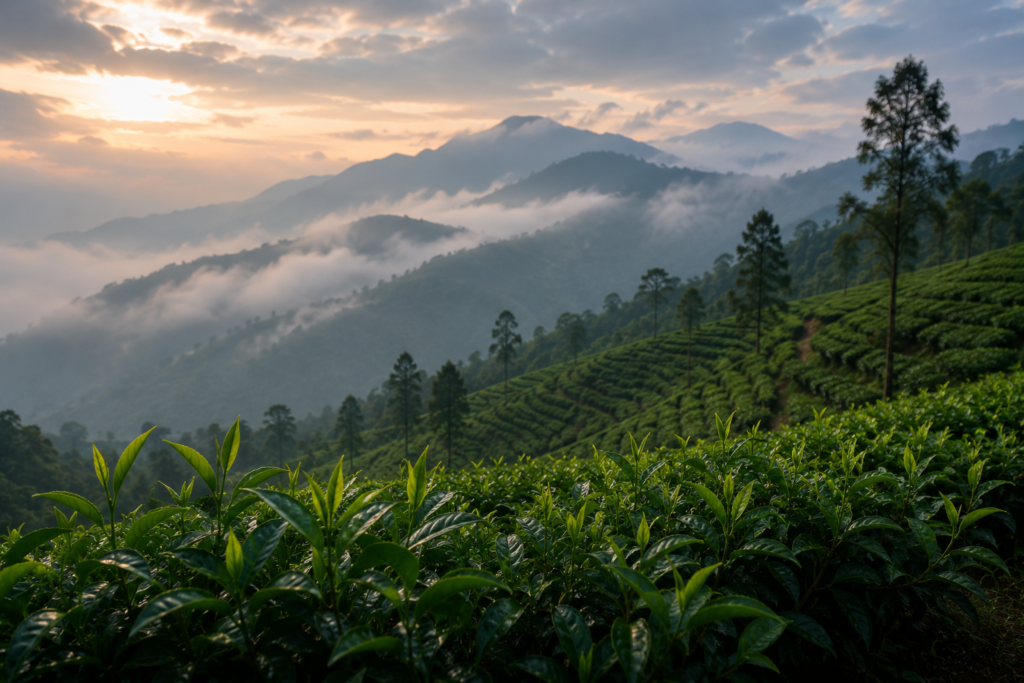
Still, the second flush persists because it offers the tea industry something increasingly rare: seasonality that people still care about simply because of the gulf in quality it brings about. In an economy built on availability and standardisation, second flush tea remains stubbornly temporal. You wait for it. You discuss whether this year’s lot was stronger than last year’s. You pretend to detect apricot. Someone else claims cedarwood. A third person says “sun-warmed raisins” with alarming sincerity.
Then, perhaps, the real value of the second flush lies in its reminder to people that agricultural products are supposed to vary. Tea is not meant to behave like bottled soft drink concentrate manufactured to erase the element of surprise. It is seasonal, climatic, inconsistent, and occasionally inconvenient. All of which to say, tea is alive and well!
The tea bush does not care about branding narratives or tasting notes or whether a buyer in London describes the liquor as “elegantly brisk.” It responds to heat, rain, altitude, soil fatigue, and time. The second flush is simply the period when those negotiations become unusually legible in the cup.
Everything else, from the mythology and the auction drama to the tasting vocabulary approaching performance art, has been thrust upon it by us.