A novice peek into a practiced craft
White lights overhead. The air conditioner hums with what seems like a purpose I’m yet to be made privy to. Control is what I can settle on, the kind of steady, regulated chill designed to remove variables, to keep the room neutrally obedient. They’ve prepared an operation theatre here, which fits the bill of the precision that goes into the art of tea tasting. Here there exists nothing accidental, from the temperature to the lighting to the silence that seems to press in from all sides.
“Reject!”
Hashim Khan’s voice cuts through my tea-steeped reverie and brings me back to the sterility of this room. The word touches land without flourish or irritation, a judgement meant not to be debated but merely recorded. I’m at Stratton Tea’s tasting room, one that smells faintly vegetal, a little sweet, a little sharp, as if the leaves themselves are holding a conversation I’ve only just walked into. One already well underway.
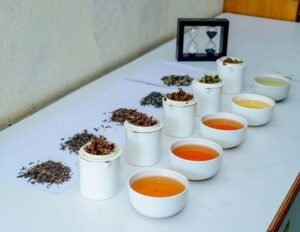
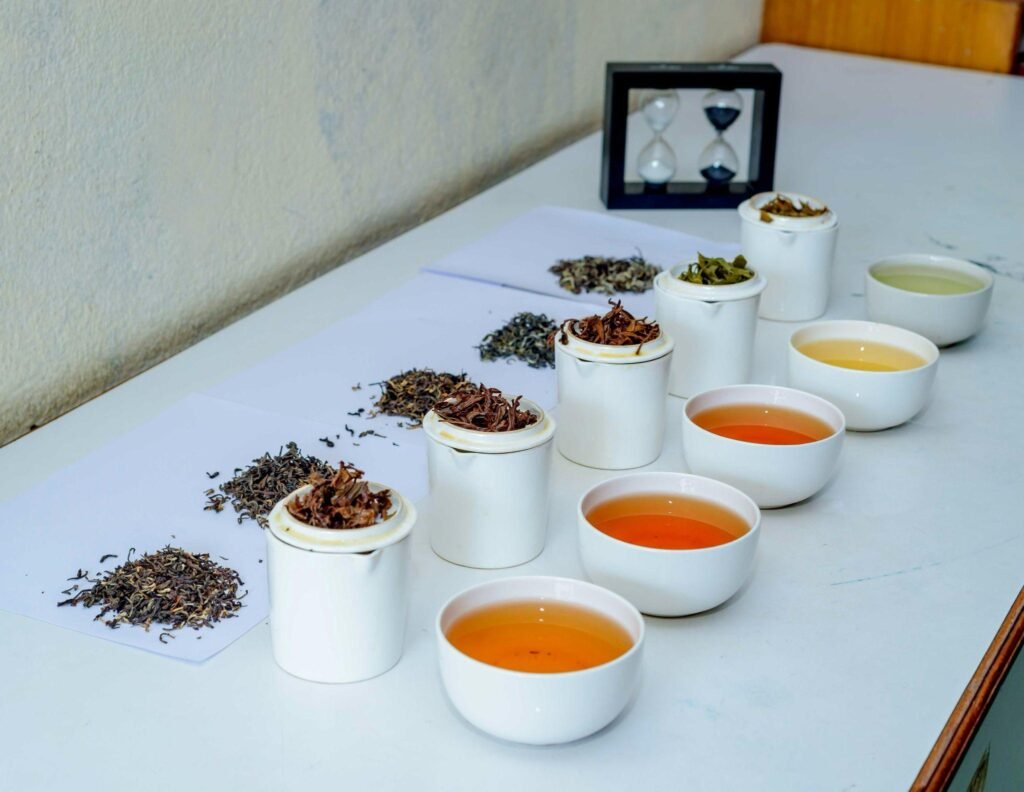
I try to make myself as inconspicuous as I can, blending into the walls, minimising movement, quickly learning that even curiosity has a volume here. In front of me, rows of cups aligned with a surgical seriousness, each one labelled neatly, waiting to be marked on a scale that allows no room for sentimentality, yet making room for the unnerving wildly different fates that lay in wait for these identical vessels.
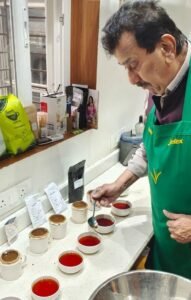
The ritual unfolds itself like complicated origami in reverse, with a choreography so refined it appears instinctive. Liquor first, held up against the unforgiving white light, its colour assessed not for beauty but for a simple but unwavering correctness. Shade plays top gun here, copper tipping too dark, and amber turning suspiciously dull will have you packing your bags. Then the aroma, broken open with a practised swirl of the cup, steam briefly released, examined, dismissed. A sip is taken, rolled across the palate with clinical patience, and expelled without ceremony. There is no hesitation, no indulgence. Appreciation, if it exists, comes later.
Between cups is homed a peculiar kind of silence that deals not in the absence of sound but the momentary heavy suspension of it. A spoon scrapes faintly against the edge of a bowl and then stops. Steam rises and disappears before it can be acknowledged, and time feels like an elastic stretched dangerously thin between decisions. I become acutely aware of my own body: the way my breath sounds louder than it should, the dryness in my mouth from the faint bitterness that seems to hang in the air, the instinct to clasp my hands, to remain small, and a gnawing need to whisper even no one has asked for silence.
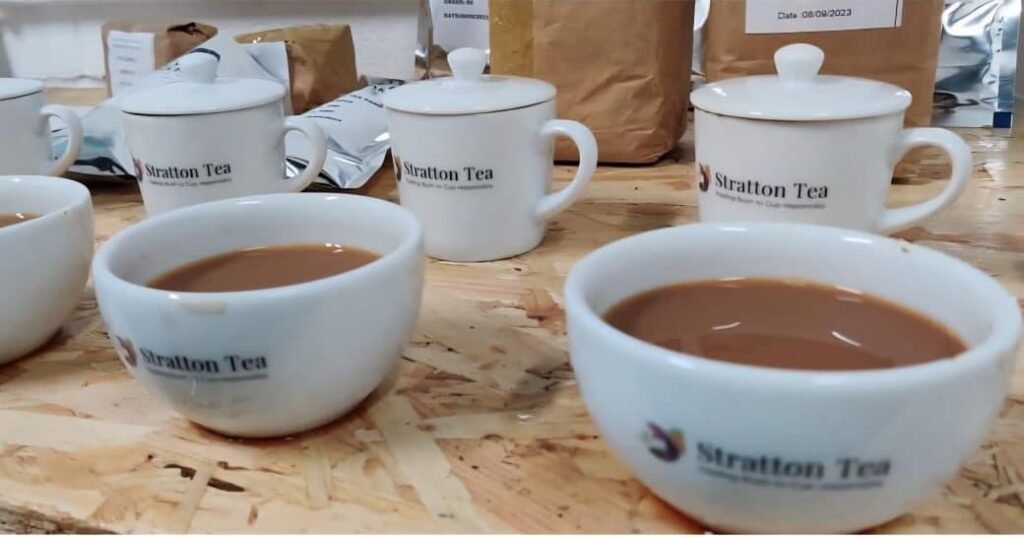
What remains in the infusion is inspected next, the unfurled leaves laid bare after steeping, examined like evidence in their colour, size and consistency. Even in surrender, the leaves are expected to explain themselves. An artist’s eagle eye is required to register the almost imperceptible differences in green and brown, to notice what others would overlook entirely. It happens with an alarmingly fascinating swiftness, as though years of looking have compressed decision-making into muscle memory.
I realise, watching him work, that this is not cruelty. It is economy. Months of growth, of rain and sun and soil, are distilled into seconds because they have to be. Romance would slow the process; nostalgia would interfere. Precision must come first. Poetry, if it arrives, will do so only after survival.
Another cup is pushed aside, another conclusion reached. Somewhere beyond this room, these teas will be spoken of in warmer tones, described, packaged, offered, loved. But here, under these lights, they are simply candidates, and not all of them make it through.
The room holds them, and me, still. White light. Cold air. Porcelain aligned with a care that borders on what a scalpel takes to flesh. Nothing stirs unless summoned. Nothing is allowed to perform.
It strikes me then that this is the necessary violence of a precision that demands of a tea to be rendered inert, held flat beneath the gaze, stripped of flourish and possibility. For this brief interval, it exists in a state of suspension, a patient etherised, offered up to understanding, before it is allowed to return unaltered into the world.